

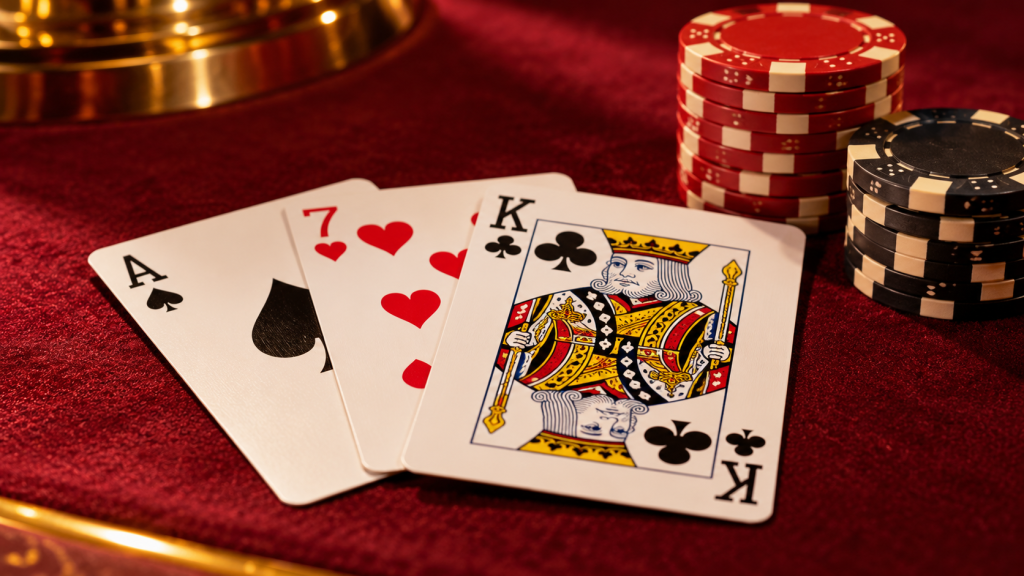
The word baccarat can describe games that share the same scoring system but use very different procedures. Baccarat Banque and Punto Banco are a good example: both aim for a total close to nine, yet the number of hands, banking arrangement and drawing decisions are not the same.
If you are comparing baccarat formats while browsing luckycola content, begin with the rules rather than the table’s appearance. Similar cards and chips can conceal an entirely different game structure.
Compare the Table Structure First
Punto Banco has one Player hand and one Banker hand, regardless of the number of people betting. Traditional Baccarat Banque has two player hands facing one banker hand. Each player side receives its own settlement against the banker.
| Question | Baccarat Banque | Punto Banco |
|---|---|---|
| How many hands are dealt? | Three | Two |
| Who supplies the bank? | Traditionally a participant acting as banker | The casino |
| Are drawing decisions automatic? | Players have limited discretion; banker has broader choice | Yes, under a fixed tableau |
| How are results compared? | Banker against each player side separately | Player against Banker |
| Does every loss change the banker? | No | No participant banking rotation |
| Is a separate Tie bet universal? | No | Common, with table-specific payouts |
The Shared Scoring System
An Ace is worth one, cards 2–9 retain their printed values, and tens and face cards score zero. Add the card values and keep only the last digit.
For instance, 8 plus 6 is four points, while Queen plus 7 is seven. A total cannot exceed nine after baccarat scoring is applied. These basics are useful in any luckycola comparison because they remain recognizable even when the surrounding rules change.
Why Drawing Rules Matter
In Punto Banco, the dealer follows a mandatory drawing chart. Bettors do not choose whether a hand receives another card.
In traditional Banque, a player hand draws on 0–4, stands on 6–7 and has a choice on 5 when no natural has ended the round. The banker acts after the two player hands and considers their actions, exposed third cards and wager sizes.
This means a single automatic Punto Banco chart cannot fully describe the banker’s task in Banque. The banker must use one final hand against two opponents.
Banking Funds Are Different from a Banker Bet
Placing a Banker wager in Punto Banco means backing a labelled hand. Acting as banker in Banque means providing funds that cover opposing stakes. Those are different commitments.
Before treating advice found through luckycola as applicable to a particular table, identify which meaning of “banker” the article uses. A recommendation about a standard Banker wager should not be presented as a universal Banque strategy.
Check Charges Before Comparing Value
A familiar Punto Banco table may deduct 5% from winning Banker wagers. Banque fees depend on the banking and house arrangements. Compare the actual charge, the amount it applies to and the timing of collection.
Avoid transferring a published house-edge percentage from one version to the other. A valid comparison requires matching rules, fees and assumptions about decisions.
Which Version Should a Beginner Learn First?
Punto Banco is easier to follow because the drawing process is fixed. Banque requires additional understanding of two player sides and an active banking role. Neither structure guarantees a favorable result.
Use this luckycola overview to identify the format, then read the specific table rules before participating. A game title alone does not confirm its availability or its precise rule set.